• My Account
    • View Order
    • Change Password
    • Edit My Address
    • Log Out
  • Shopping Cart Shopping Cart
    0Shopping Cart
Light Work
  • Info
    • Visit / Contact
    • Mission / History
    • Partners & Sponsors
    • Blog
  • Opportunities
    • AIR Program
    • Grants Program
    • UVP Commission
    • Careers
    • Artist Index
  • Events
  • Exhibitions
  • Urban Video Project
    • UVP Exhibitions
    • UVP Events
    • UVP Commission
    • UVP Community Nights
  • Contact Sheet 
    • Subscribe
    • Back Issues
  • Collection
  • Lab
    • Light Work Lab
    • Membership
    • Services
    • Education
    • Reservations
  • Shop
  • Click to open the search input field Click to open the search input field Search
  • Menu Menu

Light Work at SCOPE New York, Booth #C58

February 24, 2011/in News

We’re so excited to have a booth at the SCOPE New York International Art Fair, which begins next week on March 3. Mary Lee Hodgens, our Program Manager, and myself will both be in booth #C58 talking to artists and art lovers about our residency program, exhibitions, and our journal Contact Sheet. Of course, we will also be selling lovely limited edition, signed and numbered prints from our Fine Print Program, as well as an assortment of beautiful signed books. If you’re in the New York area, please stop by, visit with us, hear all about the latest in our mission to support the best in emerging photography, and support us with the purchase of a print or book. Every penny we make through these sales goes right back into our programs.

Carrie Mae Weems – Kitchen Table Series
Untitled, from the Kitchen Table Series, 1990/2010
Silver gelatin print, 9 7/8 x 9 3/4″ image on a 14 x 11″ sheet
Signed and numbered print in a limited edition of 100
Available online here and at SCOPE New York, Booth #C58

Click here to read more about attending SCOPE New York including ticket prices and admission times. See you at Booth #C58!

—Mary Goodwin, Associate Director

https://www.lightwork.org/uploads/LightWork_Logo_1000px.jpg 1000 1000 Shane Lavalette /uploads/LightWork.png Shane Lavalette2011-02-24 17:00:452013-03-26 10:59:00Light Work at SCOPE New York, Booth #C58

Best from the Rest: Forward Thinking Museum & PAL

February 23, 2011/in News

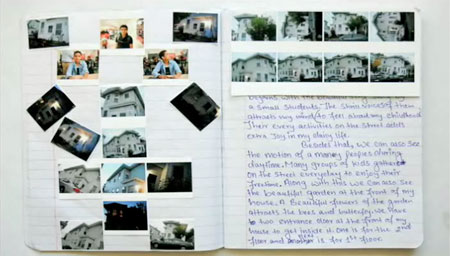
The Forward Thinking Museum has posted a wonderful video about an exciting project taking place with local students in Syracuse, New York. The Photography and Literacy Project (PAL) builds visual and verbal literacy, as well as self-confidence, by asking students to explore their lives through photography and writing. PAL founder and director Stephen Mahan launched the project in July 2010, and ever since then, hundreds of students have filled just as many notebooks with their thoughts and observations. Mahan explains, “Our educational system is set up to deal most effectively with one type of learner, and I was the ‘other’ type of student with reading and attention problems that made me feel a certain way. So what I try to do is even the playing field by using a camera as a storytelling device that articulates and validates each individual’s point of view, which builds self esteem. When the pictures are all laid out on the table, it is impossible to tell which kid has difficulties, and that is what motivates my passion.” Click on the image below to see the video and read more about PAL.

https://www.lightwork.org/uploads/PAL_screenshot1.jpg 256 450 Shane Lavalette /uploads/LightWork.png Shane Lavalette2011-02-23 11:59:142013-03-26 10:59:01Best from the Rest: Forward Thinking Museum & PAL

Rachelle Mozman on Costa del Estes

February 17, 2011/in News

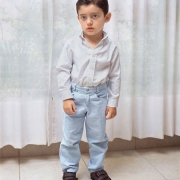
Rachelle Mozman’s exhibition Costa del Estes is currently on view at Aguilar Library in New York City until April 2, 2011. Rachelle and I recently talked about Costa and her other work in an email interview that traverses the suburbs of New Jersey and Panama, the politics of being a child in different cultures, and Mozman’s latest images of her mother.

Mary Goodwin: Earlier this month, you opened a show of your work Costa del Estes at the Aguilar Library as part of En Foco’s Touring Gallery Exhibition series. Costa del Estes, as well as a parallel series called American Exurbia, have been developed over the past couple of years. These bodies of work imagine the life of children in gated communities in Central America and the United States, settings that you describe as “. . . isolated, secure, and homogenous.” How did you get interested in making work about these communities?

Rachelle Mozman: I was initially interested in photographing what I saw to be the changing landscape of areas now known as exurbia in New Jersey. I had been driving out to teach at a community college in Randolph New Jersey, and I simply started noticing all the new corporate campuses and gated communities going up where woods once were. I was very attracted to photographing the changes. I started out making photographs of security guards in front of their posts, but then was drawn to the women I would see and then introduce myself to in the Dunkin Donuts. Then, gradually, through photographing the women in their homes, I became very interested in photographing their children. Once I began making photographs of the children, there was something that was coming through in the pictures that was very emotional for me, and I found myself narrowing in and just focusing on the children. I had grown up partially in the suburbs of New Jersey as a teenager, and I always felt a profound isolation in the American suburbs. When I realized that exurbia and the gated community was taking the idea of the suburb to a new level of isolation and homogeneity of class, I  was really drawn to exploring this, and the fantasy of isolation in order to achieve safety from the city and the other.
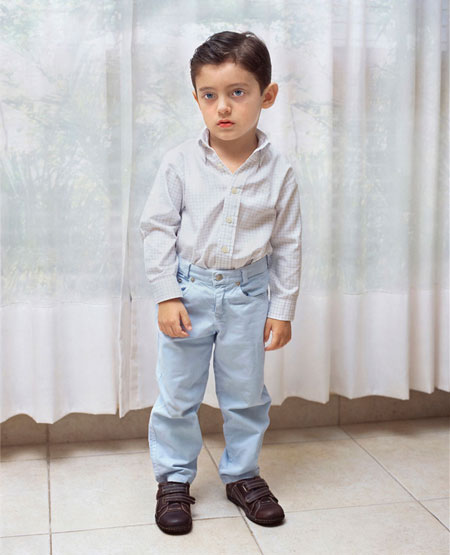
When I traveled to Panama in 2005 and realized that the gated community phenomenon had moved down there, I felt I had to make photographs. Costa del Este is the name of this gated community, where in essence all the middle class and wealthy Panamanians have moved to in the last five years. Each neighborhood has a gate, and they have a separate school, mall, etc. I was fascinated by the imitation of American lifestyle, but in a very Latin American, Panamanian way. Children there are brought up in a very small bubble, again from fear of interacting with another class or race, and fear of crime. But incidentally as the wealth and separation of class grows, so does the crime.

MG: There’s a curious power dynamic going on in Costa. All of the subjects are quite young, with the oldest looking not even tween. However, the helplessness and dependency associated with being that young is equalized in a couple of ways. Firstly, the camera is always at the children’s level giving their gaze as much importance as the viewers’. Secondly, the children don’t act like children — the way they stand and gesture has an oddly adult character to it. Do the children somehow reference the adults who also presumably populate these interiors?

RM: Yes, absolutely, the children in Costa do reference the adults. It could also be due to how they are taught to interact in front of a camera, as well as my interest in representing who they might be when they are adults. I believe the power dynamic that is picked up on in the photographs is based on the children’s sense of self-identity as an adult might have. It’s an identity that is tied to a sense of entitlement. Because the children rarely interact with people they don’t know (they are primarily in a small circle of their family and their maids), I often felt while photographing that they saw me as hired help. This is partly why there is that sense of power in their pose, and also why I chose to place the camera at eye level. I was drawn to revealing this and their conditioning. But after a few years I became very saddened by it.
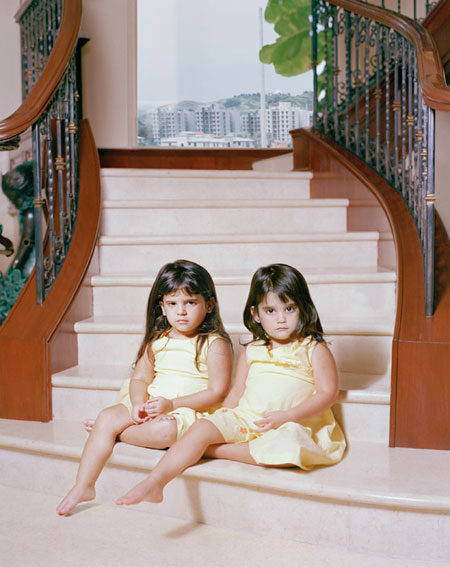
MG: How have the children reacted to seeing themselves in your images?

RM: They often feel that the photographs are beautiful, but because they are not being represented in a way they are accustomed to seeing in the local socialite magazines, hair being fluffed, and heads tilted to one side, the pictures don’t appeal to them enough. They also do not see these photographs as art, more as snapshots of people they know. As a consequence they would never buy one and place it in their homes, because it would be a snapshot of some one else’s child.

MG: Who have you been looking at as you’ve developed this series? Which artists have influenced your work along the way?

RM: Roger Ballen is an influence. Also the work of August Sander is an influence, as well as the painter Velasquez and other portrait painters of the 16th and 17th century. I was thinking a lot about the strangeness of some of Sander’s portraits as well as the representation of identity and power in the paintings of Velasquez. I am often told my pictures are strange, but it’s not something I intentionally aim for. I feel that Sander was not trying to make strange images either, but sometimes something is revealed there. This tension is something that I am interested in.

MG: Tell us a little about your participation with En Foco. How have they supported you as an artist, and specifically this exhibition? What is their Touring Gallery Exhibition series — will Costa tour to multiple venues?

RM: En Foco has been wonderful, and I am very happy that they invited me to exhibit. They are a very important institution, and they do wonderful work. I love the idea of placing this work outside the context of the art world into the community. There are no immediate plans as of yet to continue touring the exhibit, but I would be happy to do it!

MG: While you were a Light Work Artist-in-Residence, you worked on printing images from Costa and Exurbia and also on shooting images for the series that eventually became Scout Promise. Can you explain what the Girl Scout Promise is for those who weren’t Scouts themselves earlier in life? Promise seems to be connected to your earlier series through the idea of exclusive communities/groups that impose an artificial order on childhood. Although in Promise, the children seem to have a healthier, more connected relationship with the environment?

RM: Yes, I am really interested in exploring that “artificial order” on childhood you mention. But I think it’s my interest in how societies are structured and how children are conditioned that is at the heart of my interest in photographing childhood. In Girl Scout culture the promise is at the center of what they teach the girls. I found it to be simultaneously beautiful and terrifying that the girls would recite this promise at the start of every meeting.
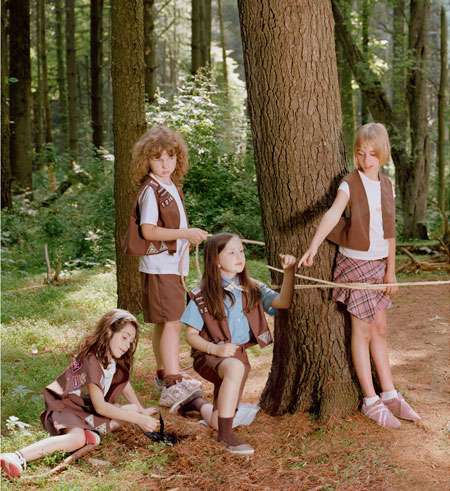
It’s the same attraction and terror I feel toward any structured group. In general I find the Girl Scouts to be very positive and even essential for girls, particularly in third world countries. I photographed the girl scouts in Panama, and I found it to be so important. In countries where the feminist movement has not gained strength, or where women have fewer rights, I feel that the Girl Scouts offer a great support and outlook for the girls. Who else in a predominantly Catholic country will teach them about sex education and the importance of protection against sexually transmitted disease?

MG: Most recently, you’ve started making pictures of your mother. Please tell us about this most recent series.

RM: The photographs of my mother are more overtly performative and theatrical than my previous work, although one can tell in my prior portraits that I am interested in blending the document with the narrative. The work with my mother, entitled Casa de Mujeres, represents three characters that are all played by my mother: an upper class woman, her darker twin sister, and her maid.
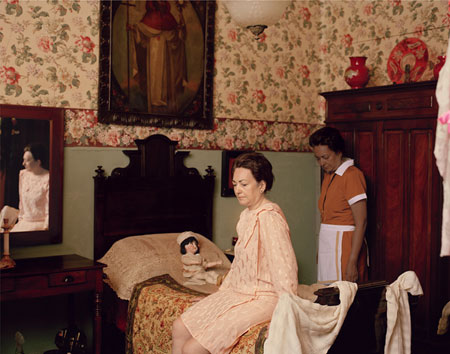
To make these images I borrowed heavily from stories from within my own Panamanian family. But the images represent a fictional home in a fictional Latin American country. In fact, so far I have photographed within the colonial homes of three Central American countries to make these images. The pictures address the conflict of race and class that can exist under one roof within Latin America, as well as within one person. Ultimately these photographs can be read as portraits of my mother as her various selves—like a nested doll—and read as images that reveal the conflict of vanity, race, and class that live within one woman.

MG: Costa del Este will be at the Library until April 2. What’s next in terms of exhibitions and publications? Where can we look for your work in 2011?

RM: In March I will be exhibiting in the launch of Humble Arts Foundation book launch of Collectors Guide Vol. 2. In June I will be exhibiting in the S Files Biennial at El Museo del Barrio, and later in the year I will be exhibiting in a commissioned project for Foto España.

MG: Thanks for catching us up on your work, Rachelle.

Images (from top): Cost Azul, 2006; Twins in Yellow, 2007; Group of four with rope, 2009; En el cuarto de la niña, 2010.

https://www.lightwork.org/uploads/Mozman_21.jpg 555 450 Shane Lavalette /uploads/LightWork.png Shane Lavalette2011-02-17 12:59:442013-03-26 10:59:01Rachelle Mozman on Costa del Estes

The Light Work Patron's Card

February 15, 2011/in News

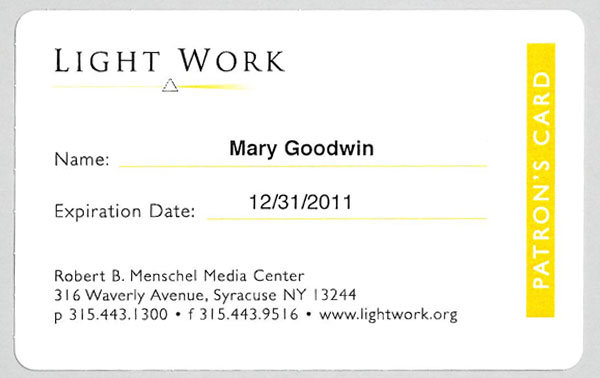
A subscription to the award-winning journal Contact Sheet is a great way to keep up on the best work in emerging photography — it has been for over 30 years. And it just keeps getting better. Now, subscribers to Contact Sheet receive a personalized Patron’s Card that gives them access to amazing benefits like free admission or discounts at dozens of participating venues across the United States and beyond.

These reciprocal benefits come through the Photographic Resource Center’s Connections Network, whose 25 members include, among others:

Amon Carter Museum, Fort Worth, TX
Center, Santa Fe, NM
Center for Photography at Woodstock, NY
George Eastman House, Rochester, NY
International Center of Photography, NYC
Museum of Contemporary Photography, Chicago
San Francisco Camerawork, CA
Southeast Museum of Photography, Daytona Beach, FL

Click here to see a full list of participating organizations and read about benefits for each.

When you purchase either a print or an online subscription, you will receive your personalized Patron’s Card in the mail to start using immediately. The card is valid for the duration of your subscription. Enjoy!

https://www.lightwork.org/uploads/patrons_card1.jpg 378 600 Shane Lavalette /uploads/LightWork.png Shane Lavalette2011-02-15 16:37:352013-03-26 10:59:01The Light Work Patron's Card

Jonathan Katz tonight at Light Work

February 7, 2011/in News

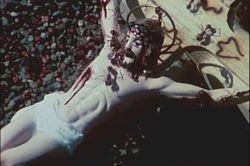
We look forward to hosting a lecture tonight by Jonathan Katz, co-curator of the ground-breaking Smithsonian National Portrait Gallery exhibition Hide/Seek: Difference and Desire in American Portraiture. If you are in the Central New York area, this is a not-to-miss event. Katz will deliver a presentation about his experiences with curating the exhibition, which is the first by a major museum to focus on sexual difference in the creation of modern American portraiture. He will also speak about the censoring of David Wojnarowicz’s video A Fire in My Belly from the exhibition. The work was removed from the exhibition by the secretary of the Smithsonian Institution, G. Wayne Clough, after pressure was exerted to remove it by William Donohue, president of the Catholic League, and by Congressional conservatives including Republican Speak of the House John Boehner and Republican Majority Leader Eric Cantor.

The removal of A Fire in My Belly seriously undermined the credibility and institutional autonomy of the Smithsonian. More importantly, it was a blatant act of censorship by those who seek to stifle free speech and the First Amendment in this country. Ever since the removal of A Fire in My Belly from the National Portrait Gallery, institutions large and small across America have staged screenings and lectures to create and maintain an open dialog about the work itself and what it means to everyone’s rights when one artist is censored due to the criticisms of special interest groups.

Katz’s lecture tonight at Light Work, entitled Ending the Loud Silence: Hide/Seek the Future of Queer Exhibitions and Freedom of Speech, will be the latest step in keeping these critical issues alive in the national dialog. Visit hideseek.org to read a list of current, past, and upcoming events in support of Wojnarowicz, openness in cultural debate, and the First Amendment.

—Mary Goodwin, Associate Director

Image: David Wojnarowicz, A Fire In My Belly (Film In Progress) and A Fire In My Belly Excerpt, 1986-87
Super 8mm film transferred to video (black and white and color, silent), 13:06 min. and 7:00 min. Courtesy of The Estate of David Wojnarowicz and P.P.O.W Gallery, New York and The Fales Library and Special Collections/ New York University.

https://www.lightwork.org/uploads/fire_in_my_belly23.jpg 166 250 Shane Lavalette /uploads/LightWork.png Shane Lavalette2011-02-07 12:59:412013-03-26 10:59:01Jonathan Katz tonight at Light Work

Yolanda del Amo talks about Archipelago

January 29, 2011/in News

Throughout the month of January, Flak Photo has featured photographs in it WEEKEND series by Yolanda del Amo from her ongoing series Archipelago. Yolanda makes images that eloquently depict moments in human relationships when people, although in the presence of another or others, exist in their own interior worlds. At these times, Yolanda’s subjects seem to inhabit an in-between space, free of words but full with the possibility of emotional tensions and dramas. Archipelago highlights these important times when the real work of keeping relationships together or driving them apart takes place. I recently had an opportunity to talk with Yolanda over email about her images, her residency at Light Work, and other events that have driven the series.

Mary Goodwin: Archipelago shows us a common and universal characteristic of our relationships that often goes unnoticed. I can imagine an ah-ha experience when you first became aware of the power inherent in these moments. How did you start making these photographs?

Yolanda del Amo: Archipelago grew out of a body of work called Domestica, which explored the relationship between a maid and her lady. I was interested in the power distribution between these two women (better say these two roles), and how the spaces they occupied reflected their personal territories. But after a while I felt the limitations of dealing just with two characters and I decided to open up the work to other people, which felt wonderful as it offered endless possibilities. The power of these moments has always fascinated me—its complexity, beauty, and sometimes awkwardness—but the ah-ha revelation for me was more about how photography as a medium could capture them effectively.

MG: I recently returned from photo LA where your image Edith, Juan was hanging in the Light Work booth. After enjoying the image and perusing the work available in Contact Sheet 159, several people referenced the work of Edward Hopper in connection with Archipelago. Has Hopper entered into your thinking about the series? What artists have influenced you in your work?

YDA: Yes, Hopper is definitely an important visual reference for me, and I have been influenced by his representation of spaces —impeccably clean, almost stark—his use of light, and the psychology of his characters who are intriguely immersed in their own worlds. Another painter who has influenced me is David Hockney, in particular his series of double portraits. But probably the most important influence for me has been the work of the German choreographer Pina Bausch for her focus on human relationships and their complexities. While I lived in Cologne during my college years, I was lucky to see many of her dance theater pieces in Wuppertal, where her company is based.

MG: Many people don’t realize that you came to photography after completing advanced studies in Mathematics and a whole career in business. How did photography come to have such a prominent place in your life?

YDA: I was working in 1999 at a German insurance corporation as a mathematician, and the company had relocated me to Argentina. It was in Buenos Aires where I took my first photography classes, and I knew from the very beginning that I had found something meaningful. I had no choice but to follow my drive! I moved to the United States, completed an MFA at Rhode Island School of Design and have been making work and teaching since then. Looking back, I am myself surprised of my sense of determination because I had no idea what I was getting into, but I am very glad I switched my focus and my career because, despite the struggle of being an artist, I am much happier now.

MG: You were a Light Work Artist-in-Residence in 2009. How did you hear about the residency program, and how did your time at Light Work and subsequent exhibition and Contact Sheet 159 help shape the trajectory for Archipelago?

YDA: I had only heard good things about Light Work from friends and colleagues in the field and was very excited to be accepted into the residency program. It was one of the most productive months in my life! You and the rest of the staff are incredibly supportive, and being all artists, you can relate on a very different level to the work and the process. I was doubly honored when I was offered a show at the main gallery, and the breadth of exposure that the publication of Contact Sheet has offered to Archipelago is invaluable.

MG: How have the images in Archipelago evolved over the years as you’ve made them in terms of your approach as a director of the subjects and in the choice of the settings?

YDA: During the first years of Archipelago I shot almost exclusively indoors because I needed some structure to frame the images. In the last years I have incorporated outdoor shots, which has been challenging but also liberating. I have also switched from 4 x 5 to 5 x 7 negatives, a more rectangular format that has opened up new possibilities of how the sitters relate to the space their share. The longer I have been shooting, the more I enjoy the collaborative aspect of the work. All the sitters I work with are people I know, and although I am indeed the director of subjects and locations, I listen and watch very carefully to what they bring to the scene. I really love the magic mix between control and unpredictability in the process.

MG: And meanwhile, you continue to create new images for the series. What are your upcoming plans for the series in terms of shooting, exhibition, and publication?

YDA: I have some ideas for shooting this year, and currently I am applying for funding as they involve some traveling. A solo exhibition of my work will open next week at the Pascal Gallery at Ramapo College. Ultimately, my goal is to publish Archipelago as a book, and I hope that all the support and exposure that I have received from Light Work will help me achieve that goal.

MG: Thank you very much for the conversation about your work, Yolanda!

Images: Aron, Helen, Laura, 2008; Edith, Juan, 2007; Anabel, Paula, Clara, 2008

https://www.lightwork.org/uploads/LightWork_Logo_1000px.jpg 1000 1000 Shane Lavalette /uploads/LightWork.png Shane Lavalette2011-01-29 17:16:172013-03-26 10:59:01Yolanda del Amo talks about Archipelago

Jonathan Katz to speak at Light Work

January 26, 2011/in News

Light Work, along with Syracuse University’s Hendrick’s Chapel and LGBT Resource Center, continues the dialog about censorship, freedom of speech, and First Amendment rights by hosting a lecture by Jonathan Katz on February 7. Katz has been speaking all over the country about these issues since the removal of David Wojnarowicz’s A Fire in My Belly from the National Portrait Gallery exhibition Hide/Seek, which he co-curated. Katz will speak about his experiences with the exhibition and the controversy, followed by a question and answer session that will allow the audience to directly participate in the discussion.

For those not able to attend the event, we’ll be posting a video to our website that will document the lecture and subsequent discussion.

Please help us spread the word about the event, and the importance of keeping the issue of free speech in the forefront of our national dialog, by emailing our press release to your friends, posting it to your Facebook, and telling us what you think about these issues right here in our comments.

Here is the full text of our press release about the event. You can also download it as a pdf by clicking here.

Jonathan Katz Lecture
Ending the Loud Silence: Hide/Seek the Future of Queer Exhibitions and Freedom of Speech

February 7, 2011, 6:00pm
Watson Auditorium

Light Work, Hendricks Chapel, and the LGBT Resource Center are pleased to announce a lecture by Jonathan Katz, co-curator of the important Smithsonian National Portrait Gallery exhibition Hide/Seek: Difference and Desire in American Portraiture. Co-curated by Katz and David C. Ward, this monumental exhibition is the first to focus on sexual difference in the making of modern American portraiture. The exhibition has been praised for its groundbreaking scholarship by a major museum and has drawn international attention when a video in the exhibition by David Wojnarowicz was censored and removed from the exhibition under pressure from a right wing religious group and conservative politicians.

The exhibition considers such themes as the role of sexual difference in depicting modern America; how artists explored the fluidity of sexuality and gender; how major themes in modern art—especially abstraction—were influenced by social marginalization; and how art reflected society’s evolving and changing attitudes toward sexuality, desire, and romantic attachment. According to Blake Gopnik of The Washington Post, the exhibition features a “…fascinating world, and powerful art…” He goes on to state that, “Scholars Jonathan Katz and David Ward have mounted one of the best thematic exhibitions in years.”  According to Holland Cotter of The New York Times, “With the exhibition Hide/Seek: Difference and Desire in American Portraiture, one of our federally funded museums, the National Portrait Gallery, here in the city of ‘don’t ask, don’t tell,’ has gone where our big private museums apparently dare not tread, deep into the history of art by and about gay artists.”

The exhibition attracted international attention when Wojnarowicz’s video A Fire in My Belly was censored and removed from the exhibition by G. Wayne Clough, secretary of the Smithsonian Institution, after receiving complaints from William Donohue, president of the Catholic League as well as John Boehner, Republican Speaker of the House, and Eric Cantor, Republican Majority Leader. The removal of the video from the exhibition has sparked public outcry from arts organizations and activists around the world, including the Tate Modern in London, the Whitney Museum and MOMA in New York City, and SF MOMA in San Francisco, among many others. Light Work joined these protests in early December by organizing a screening of Fire in My Belly on December 14 in collaboration with the ArtRage Gallery, which included a public forum about the work. Light Work will continue to show the video until February 13, the date the exhibition is scheduled to close in Washington, DC.

Light Work presents this event as an opportunity for Katz to discuss the process of curating this important exhibition, its significance, as well as the controversy surrounding the entire exhibition and Wojnarowicz’s video. In addition, there will be a question-and-answer session with Katz and audience members through which Light Work hopes to continue the dialogue about this exhibition, censorship, and the controversy.

Jonathan Katz, a scholar of post war art and culture from the vantage point of sexuality, is an associate professor and director of the visual studies doctoral program at SUNY Buffalo, as well as honorary research faculty at the University of Manchester, UK; and a guest curator at the Smithsonian Institution’s National Portrait Gallery. Known as an activist academic, Katz was the founding director of the Larry Kramer Initiative for Lesbian and Gay Studies at Yale University—the first queer studies program in the Ivy League—and founding chair of the very first Department of Gay and Lesbian Studies in the United States, at City College of San Francisco in 1990. He co-founded the activist group Queer Nation, San Francisco, and the San Francisco National Queer Arts Festival, and founded the Queer Caucus of the College Art Association. David C. Ward is a historian of the National Portrait Gallery, Smithsonian Institution.

The website http://hideseek.org offers an archive of information about the censorship of A Fire in My Belly as well as a growing list of arts institutions that are hosting events and screenings in support of Wojnarowicz and freedom of artistic expression.

Limited free parking for this event is available in Booth Garage—please RSVP to Light Work (315-443-1300). The event is free and open to the public. Gallery hours to view the video are Sunday to Friday, 10am–6pm, and by appointment. To schedule an appointment, please call 315-443-1300. Light Work is closed during school holidays.

Light Work invites groups and individuals to schedule tours and gallery talks of the facility. Light Work is a non-profit, artist-run organization dedicated to the support of artists working in photography and electronic media. Light Work is a member of CMAC, the Coalition of Museum and Art Centers at Syracuse University.

For more information, please contact Jessica H. Reed at Light Work, 315-443-1300 or jhreed01@syr.edu.

Caption: David Wojnarowicz, A Fire In My Belly (Film In Progress) and A Fire In My Belly Excerpt, 1986-87
Super 8mm film transferred to video (black and white and color, silent), 13:06 min. and 7:00 min. Courtesy of The Estate of David Wojnarowicz and P.P.O.W Gallery, New York and The Fales Library and Special Collections/ New York University.

https://www.lightwork.org/uploads/fire_in_my_belly24.jpg 166 250 Shane Lavalette /uploads/LightWork.png Shane Lavalette2011-01-26 13:17:002013-03-26 10:59:01Jonathan Katz to speak at Light Work

In search of the Light Work Collection

January 21, 2011/in News

Every once and while we just like to take a spin through the Light Work Collection, searching on a term to see what it turns up. Here’s a fantastic image by Chan Chao, titled Tin Taw Liang, that came up when searching on the word democracy. Give yourself a treat on Friday afternoon (or whenever you’re reading this), do a couple of searches, and post your favorites in the comments.

https://www.lightwork.org/uploads/LightWork_Logo_1000px.jpg 1000 1000 Shane Lavalette /uploads/LightWork.png Shane Lavalette2011-01-21 15:30:512013-03-26 10:59:01In search of the Light Work Collection

Yolanda del Amo Weekend series on Flak Photo

December 31, 2010/in News

To help everyone get the New Year started off well, Light Work is partnering with Flak Photo publisher Andy Adams to feature work from Yolanda del Amo’s lovely Archipelago in this month’s Weekend series. The Weekend series will offer new images, content, and promos throughout the month, with posts on January 1, 8, 15, 22, and 29, so keep checking in to further explore Archipelago.
Yolanda has been a steady presence at Light Work since her residency in 2009, which was devoted in the main to working on images from Archipelago. These beautiful images were also the subject of a recent Light Work exhibition, and they are featured in Contact Sheet 159, which you can preview online here. The image Winfried, Brigitte is in the Light Work Collection, and we’re proud to offer Edith, Juan, also from Archipelago, as part of our 2011 Subscription Program.

Great to see Yolanda and her images getting more and more exposure, and thanks to Andy Adams and Flak Photo for helping to get the word out on the best of what’s happening in photography today.

—Mary Goodwin, Associate Director

https://www.lightwork.org/uploads/Archipelago4101.jpg 322 410 Shane Lavalette /uploads/LightWork.png Shane Lavalette2010-12-31 13:36:272013-03-26 10:59:02Yolanda del Amo Weekend series on Flak Photo

In support of free speech

December 20, 2010/in News

As an organization whose mission is to support artists, we want to keep the heat on the protests against censorship by the Smithsonian National Portrait Gallery and their decision to pull the video, “A Fire in My Belly” by the late artist David Wojnarowicz.

Last week Light Work collaborated with ArtRage Gallery in Syracuse to screen a full version of “Fire in My Belly” and to lead a discussion with the audience about censorship in the arts. Both Light Work and ArtRage will be showing “Fire in My Belly” in our galleries until February 13, 2011.

What was clear from our conversation was that this act of censorship was a calculated anti-American attack on the First Amendment’s guarantee of free speech. We find it ironic that those who want to drape themselves in the American flag as true champions of conservative ideals are the first ones to trample on our First Amendment, just because they don’t like what others use it to express.

Freedom, and especially freedom of speech, is what defines democracy in the United States. Take that away and we become Iran or North Korea. That is why those who want to censor free speech are practicing the most vehement anti-American behavior possible, and they need to be called out.

Fortunately there have been loud and widespread protests by artists, activists, and supporters of free speech across the country. We urge you to join these protests and let your voice be heard.

—Jeffrey Hoone, Executive Director

There is more information about protests across the country at hideseek.org and PPOWpallery.com. Also here are several links about a protest march in New York on December 19:

Protesters at Met Rally for Artwork | Wall Street Journal; Dec. 20, 2010
New Yorkers Protest Smithsonian Censorship | Advocate.com; Dec. 20, 2010

Protesters decry Smithsonian’s removal of controversial video | LosAngelesTimes.com; Dec. 20, 2010
NYC Protest Against Smithsonian Censorship of David Wojnarowicz Video | iReport;Dec. 19, 2010

Finally, you can join a letter writing campaign to alert your representatives and other elected officials that this type of censorship will not be tolerated in America. Click here to download the text of the letter, add the name(s) of the intended recipient(s), sign, and send.

https://www.lightwork.org/uploads/fire_in_my_belly25.jpg 166 250 Shane Lavalette /uploads/LightWork.png Shane Lavalette2010-12-20 18:08:432013-03-26 10:59:02In support of free speech

Kitchen Table heats up

December 16, 2010/in News

In the past couple of days Carrie Mae Weems and the Kitchen Table series have been featured in Jim Hedges’ Artworld Gift Guide for the Holidays, a list at the Huffington Post website that highlights, “. . . real art made by recognized contemporary masters for modest prices.” Thanks to Hedges for highlighting this amazing print, available through Light Work, as well as the other fine pieces in the list, including work by Louise Bourgeois, Andy Warhol, and Kehinde Wiley, among others.

Weems also made the news yesterday when a triptych of her work from the Kitchen Table series fetched the highest price at a Christie’s auction, selling for higher than images made by Irving Penn and Ansel Adams, as reported on the Vintage Photo Forum.

https://www.lightwork.org/uploads/LightWork_Logo_1000px.jpg 1000 1000 Shane Lavalette /uploads/LightWork.png Shane Lavalette2010-12-16 11:33:032013-03-26 10:59:02Kitchen Table heats up

Kitchen Table, Carrie Mae Weems at Art Institute of Chicago

December 8, 2010/in News

The Art Institute of Chicago is offering a great opportunity to see Carrie Mae Weems’ Kitchen Table Series in its entirety. Starting tomorrow night at 5pm, the 20-image series, widely held as a masterpiece of performance and story-telling within the photographic frame, will be on view in AIC’s Gallery 292. The images were presented to the AIC as a promised gift by Liz and Eric Lefkofsky earlier this year in March, and the installation will be on view for six months until June 5, 2011. Carrie Mae Weems gives a lecture about the series tomorrow night starting at 6pm followed by a gallery viewing until 8pm. If you’re in Chicago tomorrow night, this is definitely an event to put on your list.

In Kitchen Table, Weems uses a subtle vocabulary of props, gesture, and gaze to frame complex questions about identity, gender construction, representation, parenthood, and the nature of human relationships. The nonlinear narrative and issues presented in this work remain as topical and thought-provoking today as when the images were first created in the early 1990s.

Fans of the Kitchen Table Series and Carrie Mae Weems should know that the Light Work 2011 Subscription program features the image Untitled (Woman and Daughter with Make-up), a hand-printed silver gelatin print in a numbered edition of 100.  Click here for more information and to purchase.

https://www.lightwork.org/uploads/LightWork_Logo_1000px.jpg 1000 1000 Shane Lavalette /uploads/LightWork.png Shane Lavalette2010-12-08 17:40:382013-03-26 10:59:02Kitchen Table, Carrie Mae Weems at Art Institute of Chicago
Page 22 of 30«‹2021222324›»

Pages

  • Artist Index
  • Artist-in-Residence Program
  • Blog
  • Calendar
  • Camera Training Session
  • Canon 4000- Matte-Loaded (Ren Hang)
  • Canon Pro-1000 Matte & Luster (Claude Cahun)
  • Careers
  • Change Password
  • Checkout → Pay
  • Chronology
  • Critique Space
  • Darkroom
  • Digital Archive
  • Doireann O’Malley: New Maps of Hyperspace_Test_01 Online Exhibition
  • Drum Scanner Training
  • Edit My Address
  • Epson 11000XL (Langston Hughes)
  • Epson 11880-1 (Biggie Smalls)
  • Epson 4880-1 (Francesca Woodman)
  • Epson 4900-2 (Edward Weston)
  • Epson 4900-3 (Wegee)
  • Epson 4900-4 (Diane Arbus)
  • Epson 4900-5 (Robert Capa) Piezography K6
  • Epson 5000 Luster-Loaded (Bernice Abbott)
  • Epson 9800-1 Luster-Loaded (Gordon Parks)
  • Epson v700-1 (Mary Shelley)
  • Epson v700-2 (Sylvia Plath)
  • Exhibitions
  • Flatbed Scanner Training
  • Flextight Scanner Training
  • Flextight X1 (Kurt Vonnegut)
  • Free Orientation Session
  • Frequently Asked Questions (FAQ)
  • Frontpage
  • High Wattage: Intro to Lighting Studio
  • How to Apply
  • How to Apply
  • Howtek 4500 Drum Scanner (Roddy Piper)
  • Imacon (Susan Sontag)
  • Input: Import & Organize
  • Lab
  • Lab / Classes
  • Lab / Education
  • Lab / Membership
  • Lab / Reservations
  • Lab / Services
  • Lab / Upload Files
  • Large Format Printer Training
  • Light Work
  • Light Work + Autograph
  • Light Work Collection
  • Light Work Grants
  • Light Work Library
  • Light Work Reader
  • Light Work UVP Interact
  • Lighting Studio
  • Mission / History
  • Opportunities
  • Output: Process & Print
  • Partners & Sponsors
  • Print-Tool Tutorial
  • Return/Refund Policy
  • Sign Up for Our Newsletter
  • Small Format Printer Training
  • Staff
  • Thanks
  • The Dark Arts: Intro to Darkroom
  • Track your order
  • Upcoming Exhibitions
  • Urban Video Project (UVP) / Events
  • Urban Video Project (UVP) Commission
  • Urban Video Project (UVP) Exhibitions
  • UVP Community Nights
  • View Order
  • Visit / Contact

Categories

  • Close Readings
  • Elsewhere
  • Etc.
  • Events
  • Exhibitions
  • From the Files
  • Interviews
  • Lab
  • News
  • Re:Collection
  • Shop
  • Studio Visit
  • Urban Video Project
  • Watch

Archive

  • April 2026
  • October 2025
  • May 2025
  • September 2024
  • May 2024
  • November 2023
  • October 2023
  • September 2023
  • June 2023
  • May 2023
  • February 2023
  • September 2022
  • August 2022
  • May 2022
  • April 2022
  • March 2022
  • January 2022
  • November 2021
  • October 2021
  • September 2021
  • August 2021
  • July 2021
  • June 2021
  • May 2021
  • April 2021
  • March 2021
  • February 2021
  • January 2021
  • October 2020
  • August 2020
  • July 2020
  • June 2020
  • May 2020
  • April 2020
  • March 2020
  • February 2020
  • September 2019
  • July 2019
  • May 2019
  • April 2019
  • March 2019
  • February 2019
  • January 2019
  • December 2018
  • September 2018
  • August 2018
  • May 2018
  • April 2018
  • February 2018
  • October 2017
  • July 2017
  • February 2017
  • December 2016
  • November 2016
  • September 2016
  • July 2016
  • May 2016
  • March 2016
  • February 2016
  • December 2015
  • November 2015
  • October 2015
  • September 2015
  • August 2015
  • June 2015
  • May 2015
  • April 2015
  • March 2015
  • January 2015
  • December 2014
  • November 2014
  • October 2014
  • July 2014
  • June 2014
  • May 2014
  • April 2014
  • March 2014
  • February 2014
  • January 2014
  • December 2013
  • November 2013
  • October 2013
  • September 2013
  • June 2013
  • May 2013
  • April 2013
  • March 2013
  • February 2013
  • January 2013
  • December 2012
  • November 2012
  • October 2012
  • September 2012
  • August 2012
  • June 2012
  • May 2012
  • April 2012
  • March 2012
  • February 2012
  • January 2012
  • December 2011
  • November 2011
  • September 2011
  • August 2011
  • June 2011
  • May 2011
  • April 2011
  • March 2011
  • February 2011
  • January 2011
  • December 2010
  • November 2010
  • October 2010
  • September 2010
  • August 2010
  • July 2010
  • June 2010
  • May 2010
  • April 2010
  • March 2010
  • February 2010
  • January 2010
  • December 2009
  • November 2009
  • October 2009
  • September 2009
  • August 2009
  • July 2009
  • June 2009
  • May 2009
  • April 2009
  • March 2009
  • February 2009

Light Work was founded as an artist-run non-profit organization in 1973.

Our mission is to provide direct support to artists working in photography and related media, through residencies, publications, and a community-access lab facility.

Read more →

Light Work Lab offers members a the highest quality printing and scanning equipment, black-and-white darkroom, a lighting studio, and a lounge and library where artists from all over the world converge.

Become a member today →

Connect with Light Work

Instagram →
Facebook →
Twitter →
Vimeo →
Newsletter →

Copyright ©1973– Light Work — 316 Waverly Ave. Syracuse, NY 13244
  • Link to Mail
  • Link to X
  • Link to Facebook
  • Link to Instagram
  • Link to Vimeo
  • Link to Vimeo
  • Link to Rss this site
Scroll to top Scroll to top Scroll to top